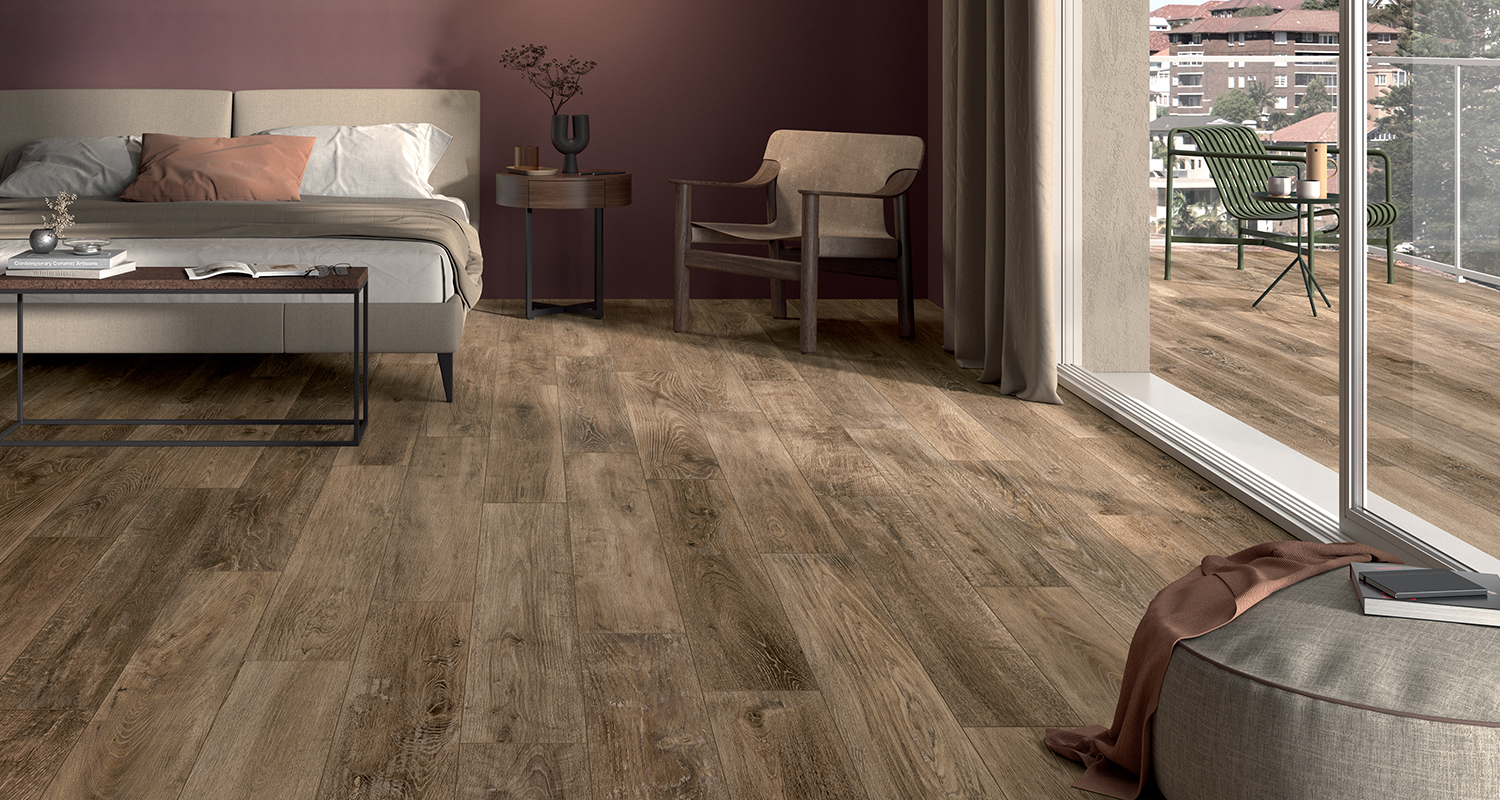
The Best Tile Layout Patterns: A Guide to Choosing and Design Ideas
Discover the best layout patterns for porcelain stoneware. Ideas and tips for design floors and wall coverings made with Panaria Ceramica tiles.
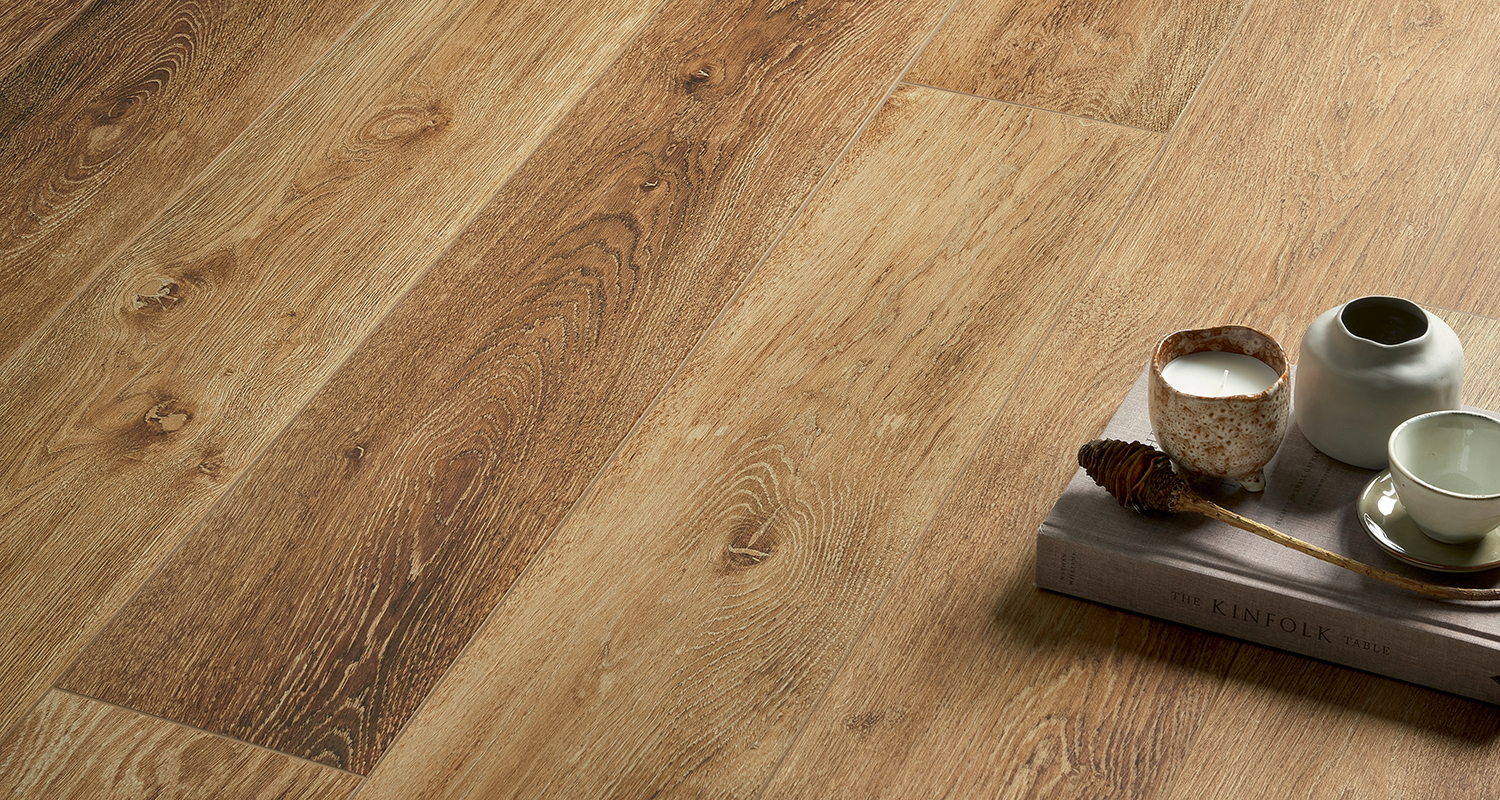
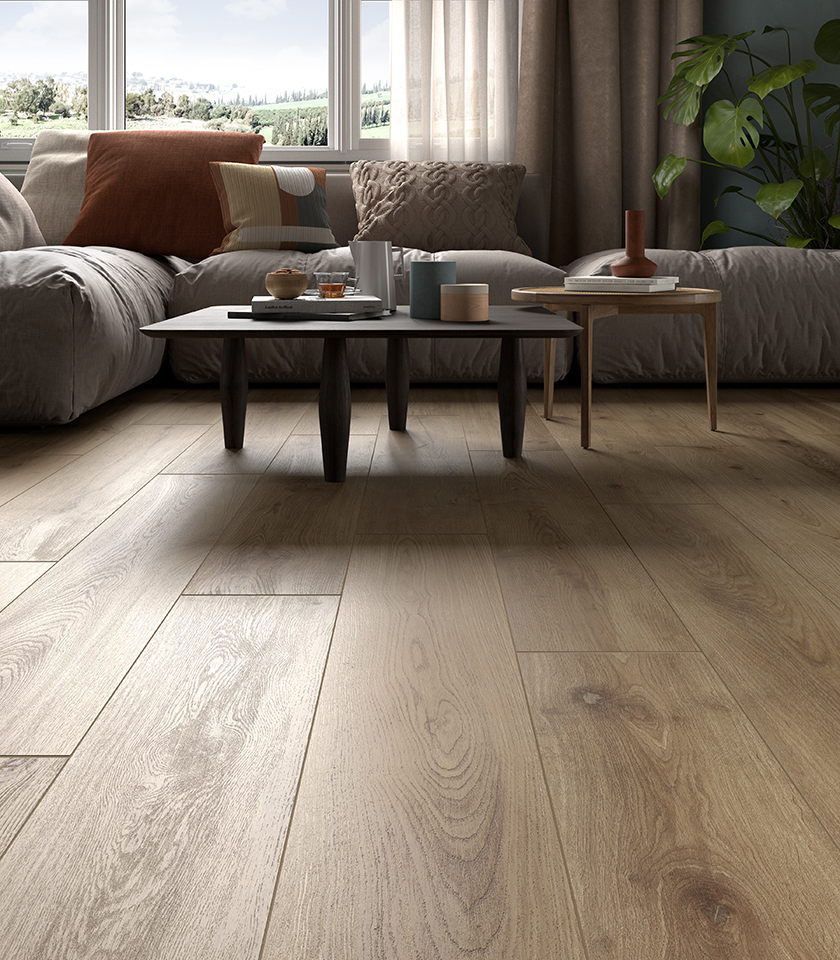
Wood-effect tiles are now one of the most effective ways to combine style and practicality. If you love the warm look of parquet but are put off by the upkeep or fragility of real wood, porcelain stoneware offers a practical answer.
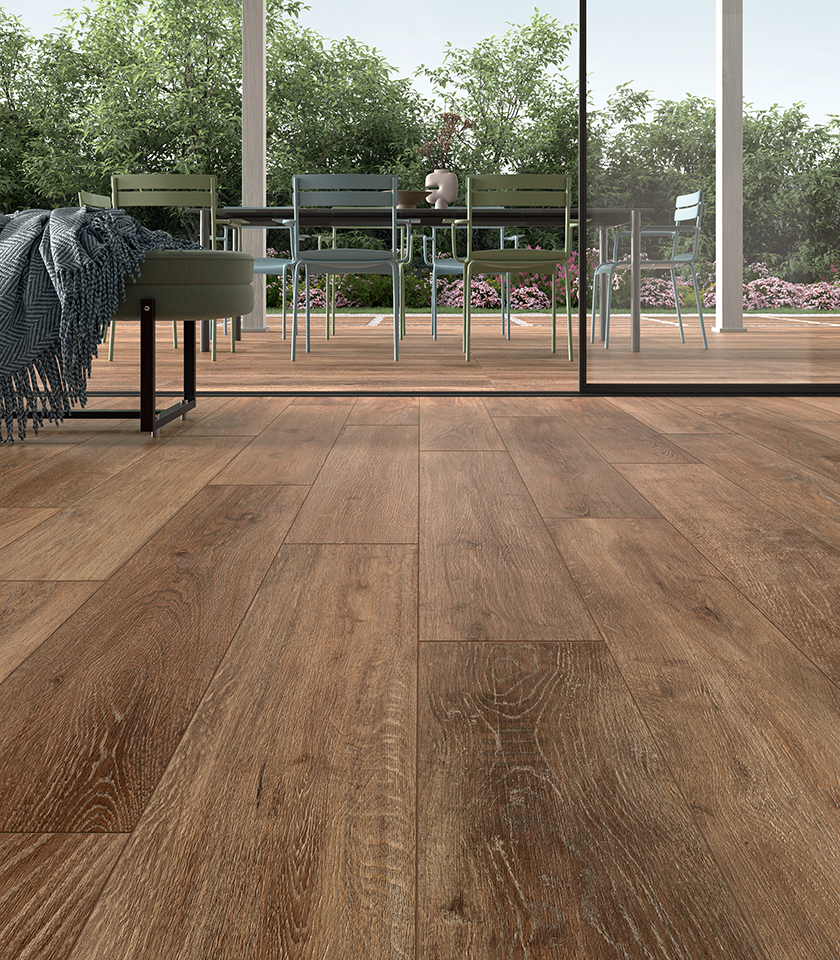
Thanks to today's technology, wood-look tiles faithfully reproduce the species, grain and tonal variations of natural wood, while suiting every room, even the most demanding.
With Panaria, this type of flooring goes beyond a convincing imitation: it becomes a genuine design tool, made to last and to make everyday life easier.
Wood-look tiles are for those who want to give their home a warm, natural atmosphere without being tied to a single decorative style. Depending on the format and shade chosen, they can evoke a Scandinavian parquet in light, pared-back tones, an antique plank with a weathered charm, or an exotic wood with deep, rich nuances. This variety makes them equally at home in contemporary interiors and in more rustic or industrial settings.
Porcelain stoneware is built to last. It stands up to scratches from heavy foot traffic and from children playing and racing around the house, as well as to abrasion, moisture and temperature changes. In a bathroom or kitchen, this advantage is decisive. Where parquet demands careful handling, wood-effect tiles stay stable and dependable over time.
Another key advantage of parquet-effect tiles is their upkeep. Unlike wood, which needs specific treatments such as wax or varnish, porcelain stoneware is very easy to clean. Day to day, lukewarm water and a neutral detergent are generally enough to keep the surface looking its best. For more stubborn stains, products made specifically for porcelain stoneware can be used.
In practice, looking after wood-effect tiles comes down to a quick clean, with no need for treatments such as waxing or sealing. A practical solution, ideally suited to living spaces in constant daily use.
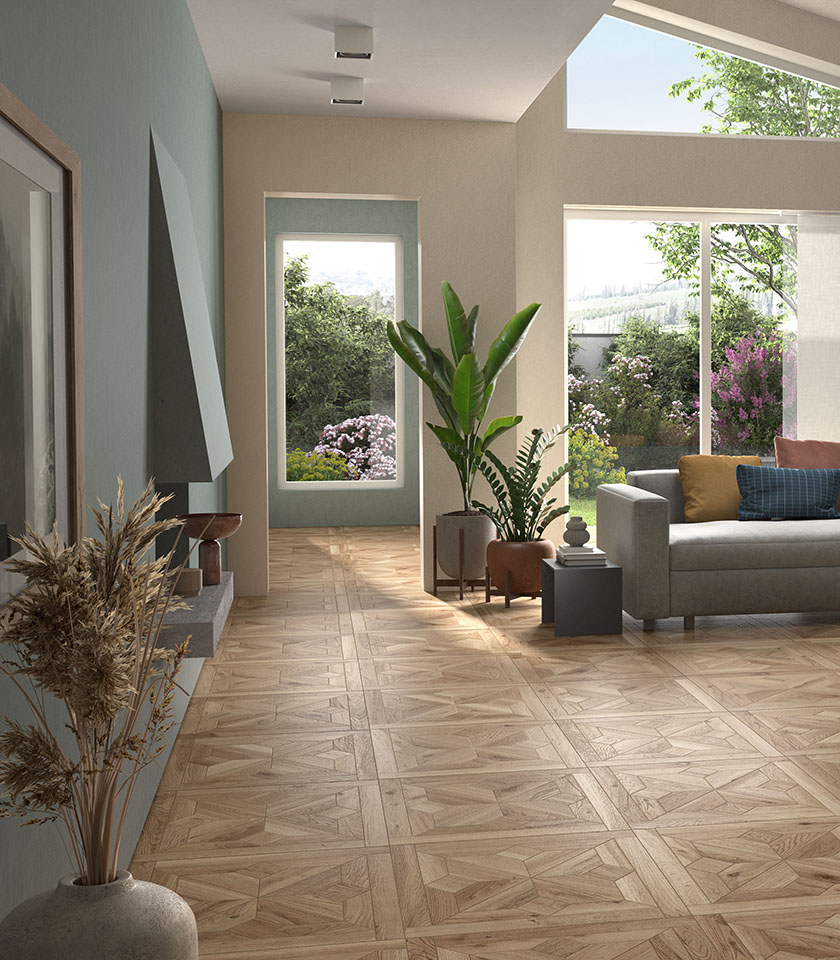
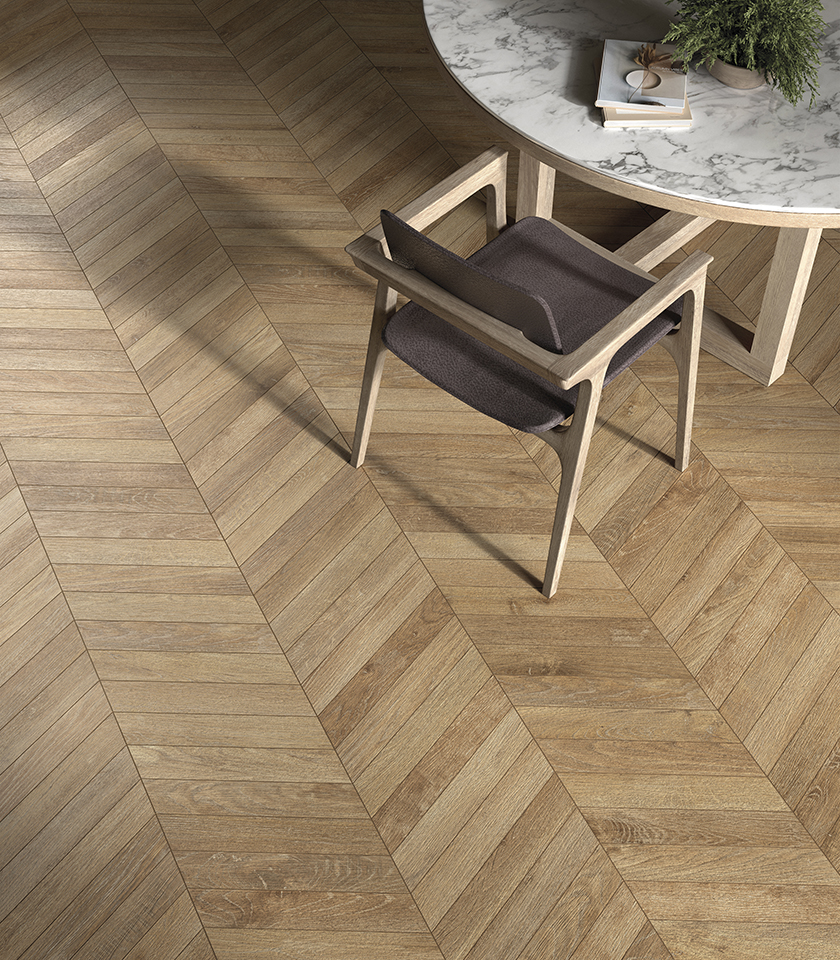
Natural parquet remains a strong aesthetic benchmark, but it has certain technical limitations: it needs regular maintenance (oiling, varnishing or sanding) to preserve its properties and original appearance. It is also more prone to scratches and everyday knocks, and can warp when exposed to moisture or temperature changes, which makes it less suitable for wet rooms or high-traffic areas. Parquet-effect tiles offer a high-performing alternative, faithfully reproducing the look of wood while being more resistant to water, scratches and impact, more stable over time and less affected by temperature variations.
Choosing wood-effect tiles also comes down to the style you are after. Panaria collections cater to a range of decorative intentions.
The Kairos collection stands out for its great versatility. It offers a wide range of sizes, including a 20 mm option for outdoor spaces. Its distinctive look and variety of sizes make it possible to create continuity between the different spaces of the home.
The Borealis collection takes a more expressive approach, with pronounced grain and a more textured wood look. Its 30x180 size heightens the plank effect and adds character to a space.
The Nuance collection follows a more minimalist approach. Its subtler grain, less contrasted than Borealis, gives a more uniform, calming result, particularly well suited to contemporary interiors.
Wood-effect porcelain stoneware floor and wall tiles stand out for their versatility and can be used in every room of the home.
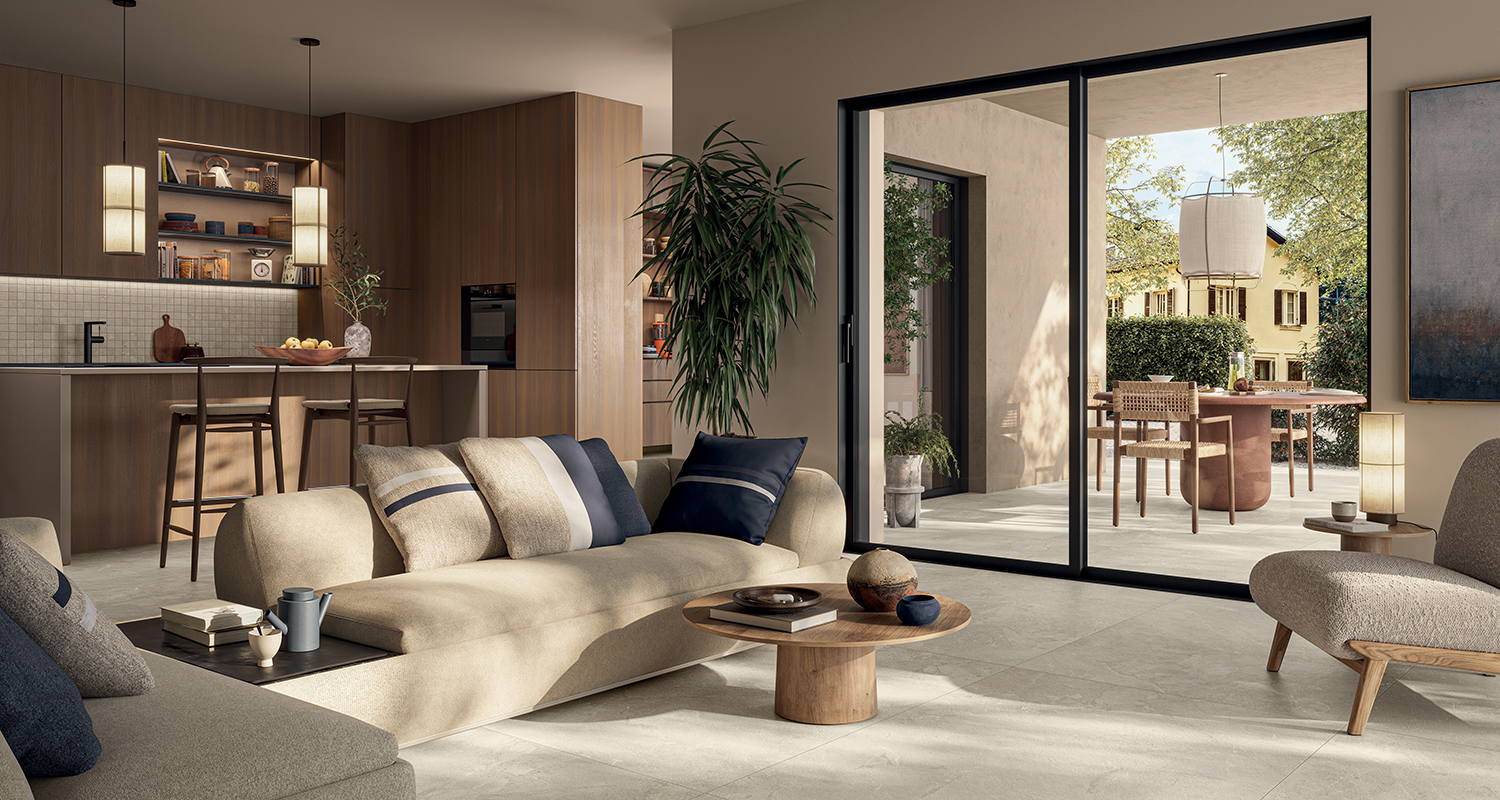
In the living room and bedrooms, they bring a feeling of warmth while remaining easy to maintain.
In the kitchen and bathroom, they introduce the look of wood without the constraints of moisture, offering a solution that is both beautiful and functional.
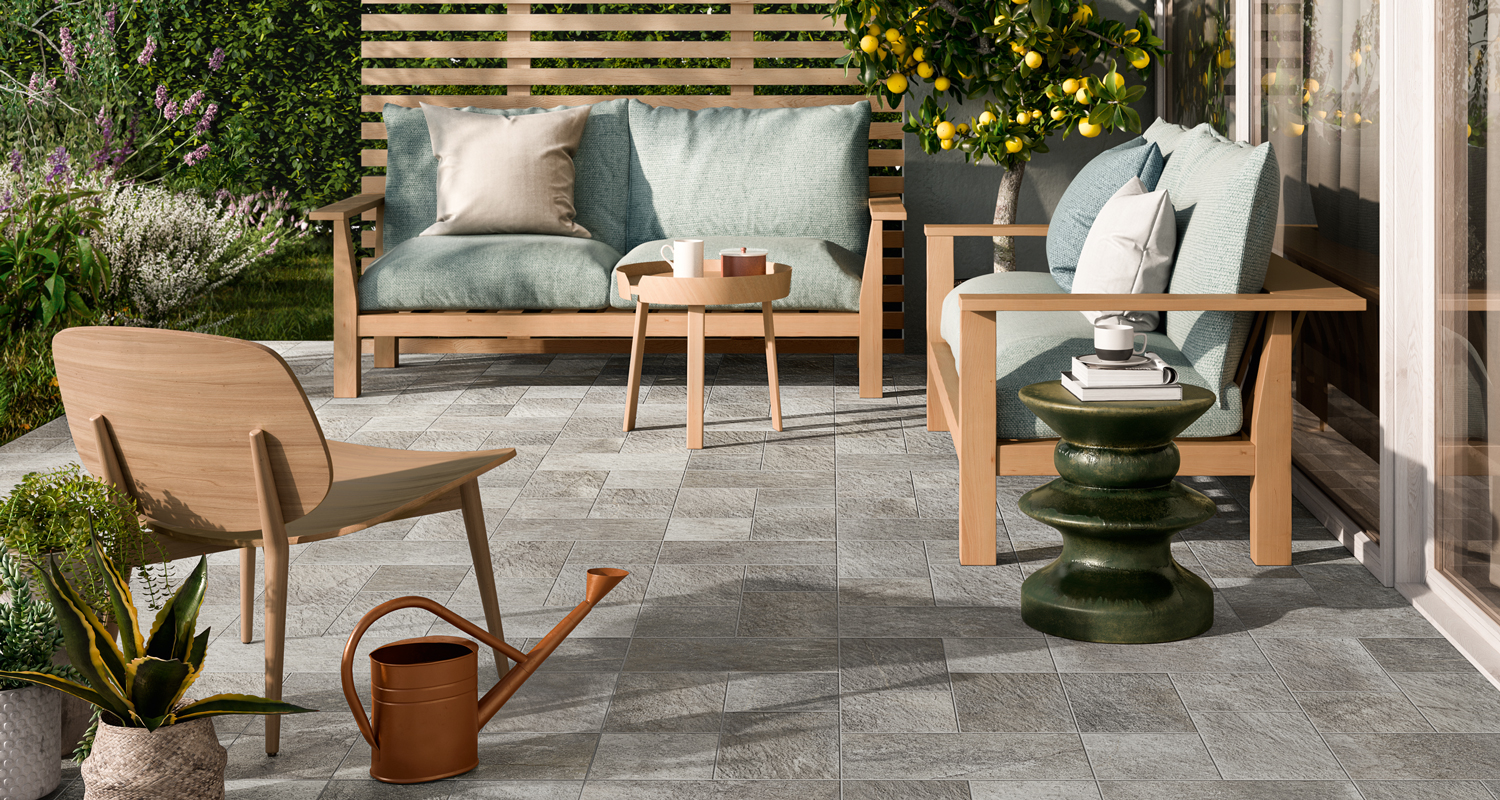
Outdoors, porcelain stoneware comes into its own thanks to its extra thickness, generally 20 mm, and its slip-resistant treated surfaces. These technical features open up a wide range of applications: raised floors for paths and terraces, pool surrounds, or slabs laid dry on grass, sand or gravel. This creates visual and material continuity between inside and out, from the living room to the garden.
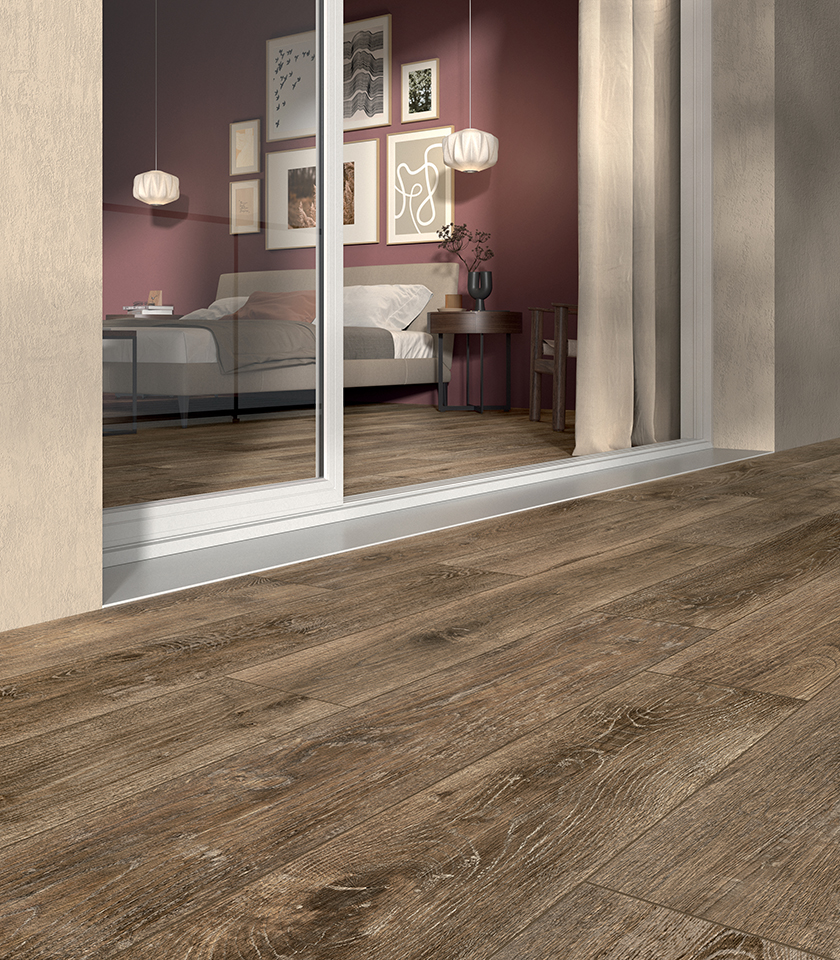
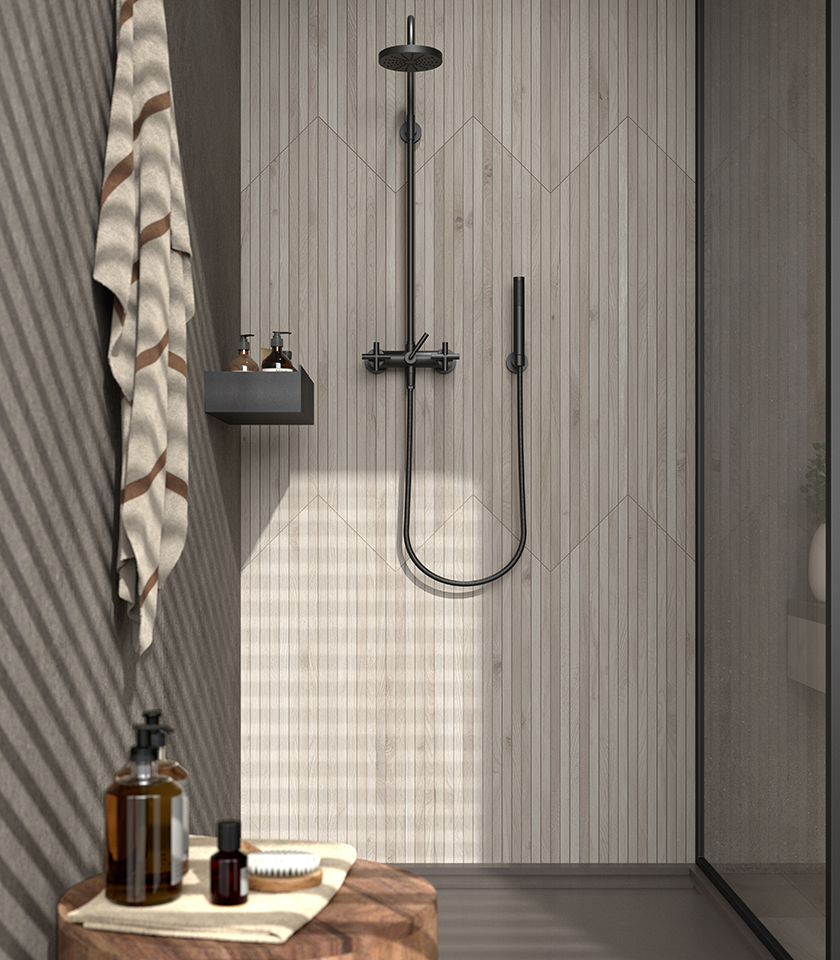
Porcelain stoneware has excellent thermal conductivity, making it perfectly compatible with underfloor heating. It promotes even heat distribution and improves thermal comfort throughout the home.
Wood-effect porcelain stoneware tiles are part of a sustainable approach thanks to their longevity and the manufacturing processes used.
Panaria relies on ISO 14001 and EMAS certified systems, as well as a life cycle assessment in line with ISO 14067. Its products also comply with ISO 17889-1 of ceramic systems.
Not necessarily. The level of grip depends on the finish you choose. For damp rooms such as the bathroom, or for outdoor use, it is advisable to opt for a textured finish or a slip-resistant one, rated R10 or R11 under the DIN 51130 standard. These finishes provide enough grip for safe everyday use, without compromising the look of the surface.
Grout close to the shade of the tile gives a more natural, uniform result while enhancing the wood effect.