Tiling a Small Bathroom: Practical Tips and Style Ideas for Elegant, Functional Spaces
Concrete suggestions and style advice for renovating a small bathroom with elegance, by choosing the best wall tiles.
In this article we explore the main tile formats available in porcelain stoneware, analysing their characteristics, applications and design potential.
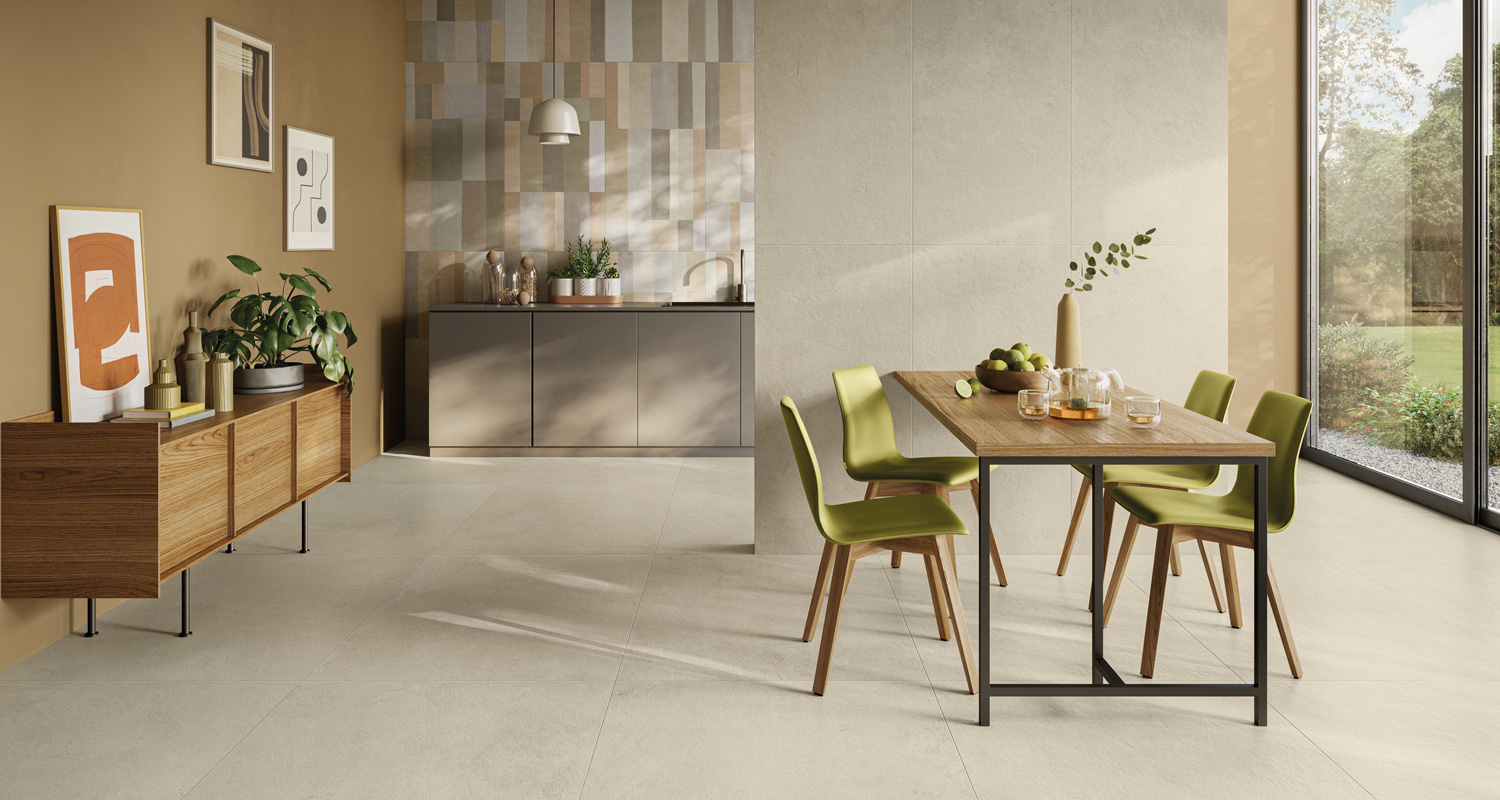
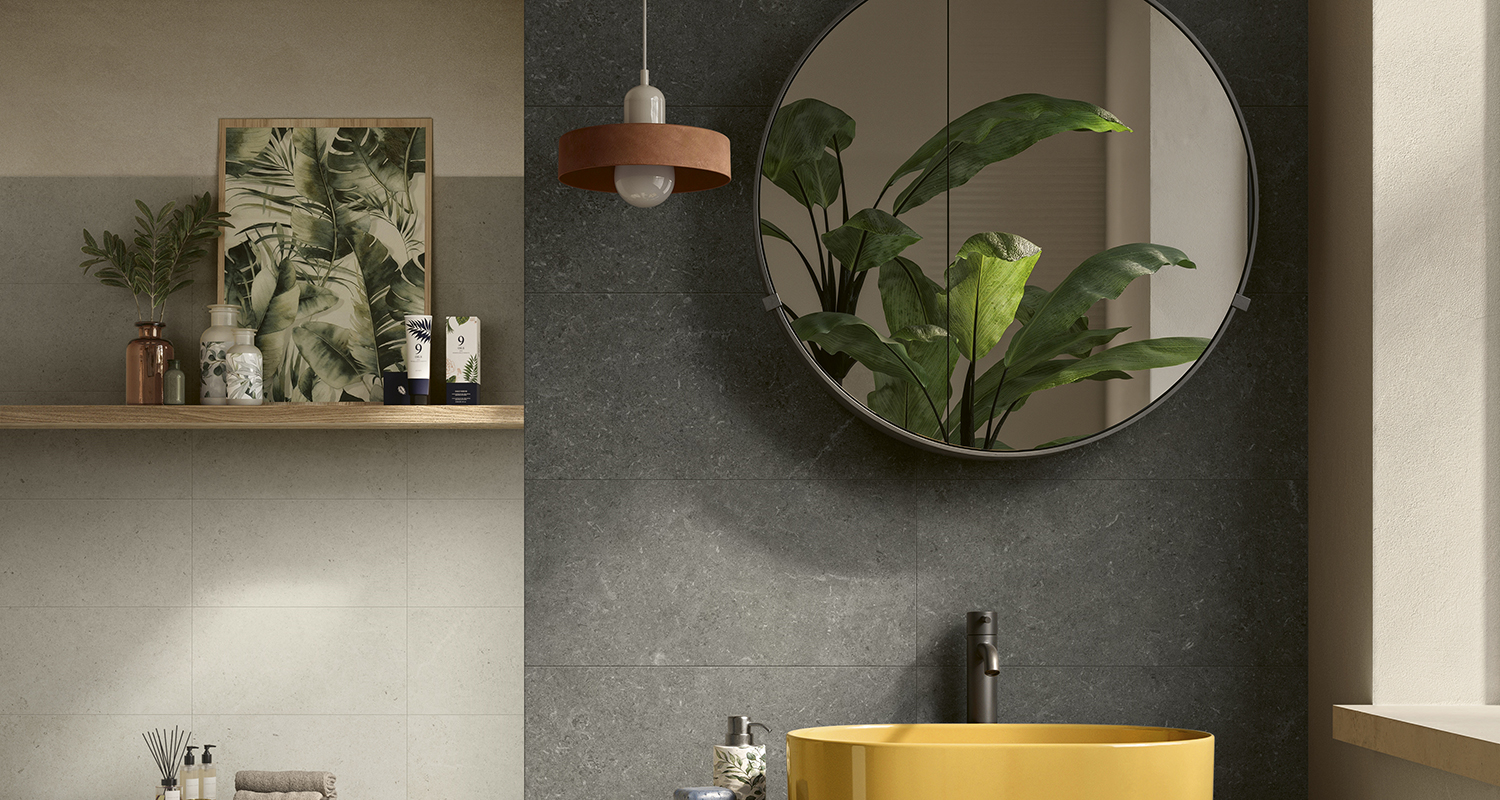
In the world of interior design, tile size is a decision just as defining as aesthetic style or colour tone. Thanks to the wide range of manufacturing technologies available and its inherent durability, porcelain stoneware now offers an exceptionally broad range of formats, capable of meeting every design requirement: from large contemporary spaces to more intimate settings, from floors to wall coverings, from interiors to exteriors. Choosing small or large tiles means shaping how a living space is perceived, suggesting a certain visual rhythm across surfaces, and even influencing the way light interacts with the environment. Large, modern tiles will suit a contemporary-style living area, while smaller tiles are a natural choice for the bathroom.
As mentioned, format has an impact on several aspects of a project. First and foremost, spatial perception: large formats open a space up, while smaller ones articulate and animate it. Reducing the number of grout lines strengthens the visual continuity of the tiled surface, enhancing both its look and its colour. The overall style of a room is also influenced by tile size, because every format speaks a precise aesthetic language that is worth understanding and applying with intention. As for equally important considerations such as functionality and ease of maintenance, it is worth noting that some laying solutions make cleaning and hygiene easier, while others can make the most of smaller surfaces and even irregular ones.
In a sufficiently wide and varied ceramic catalogue, each format is typically designed to integrate within a coordinated design system. This allows for numerous coherent combinations — both across different looks and between floors (mostly laid with large tiles) and wall coverings ranging from mosaic to large-format slabs.
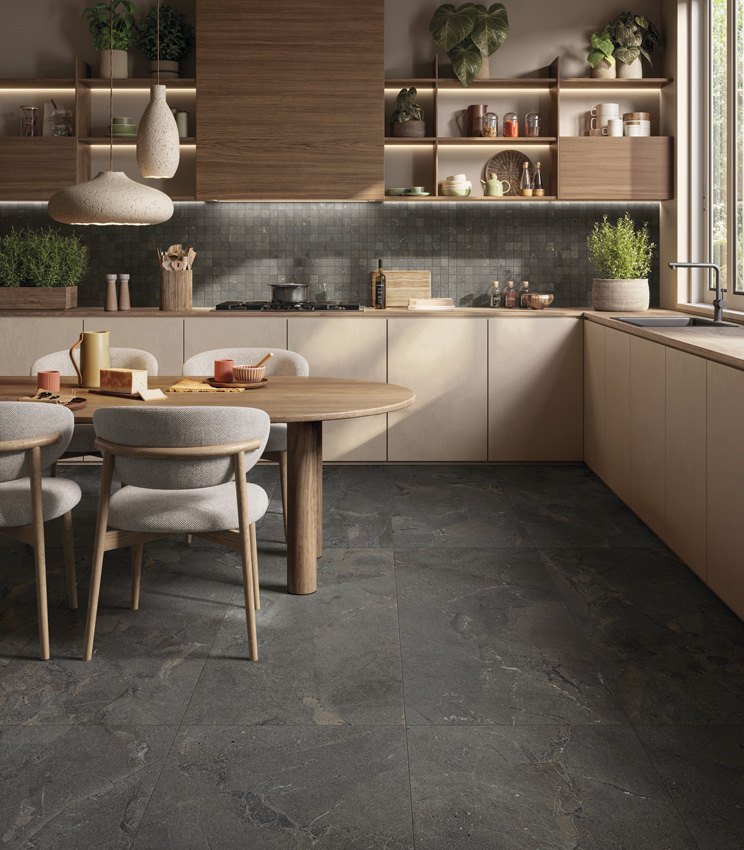
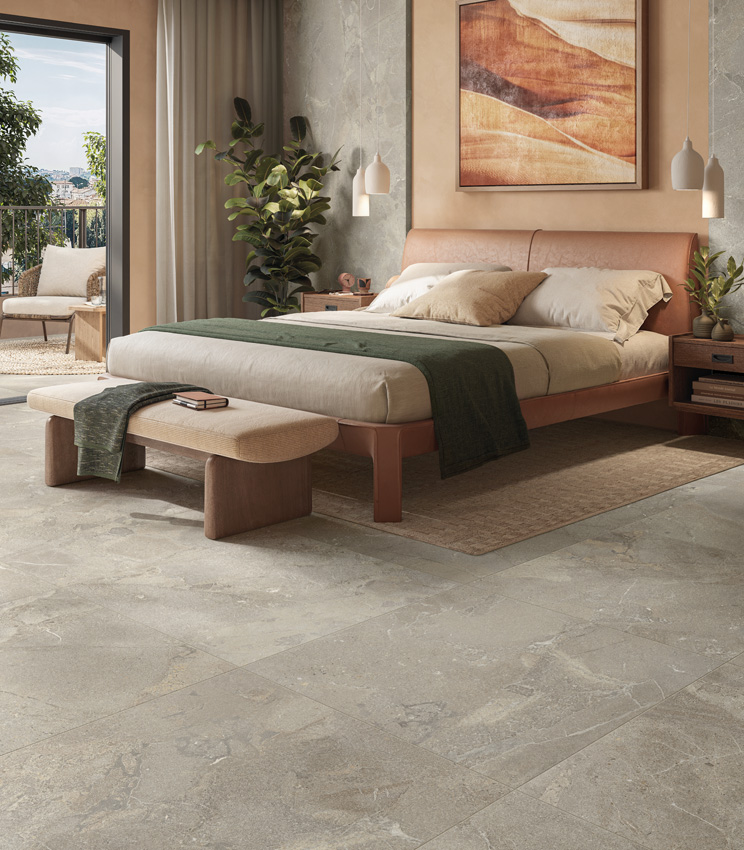
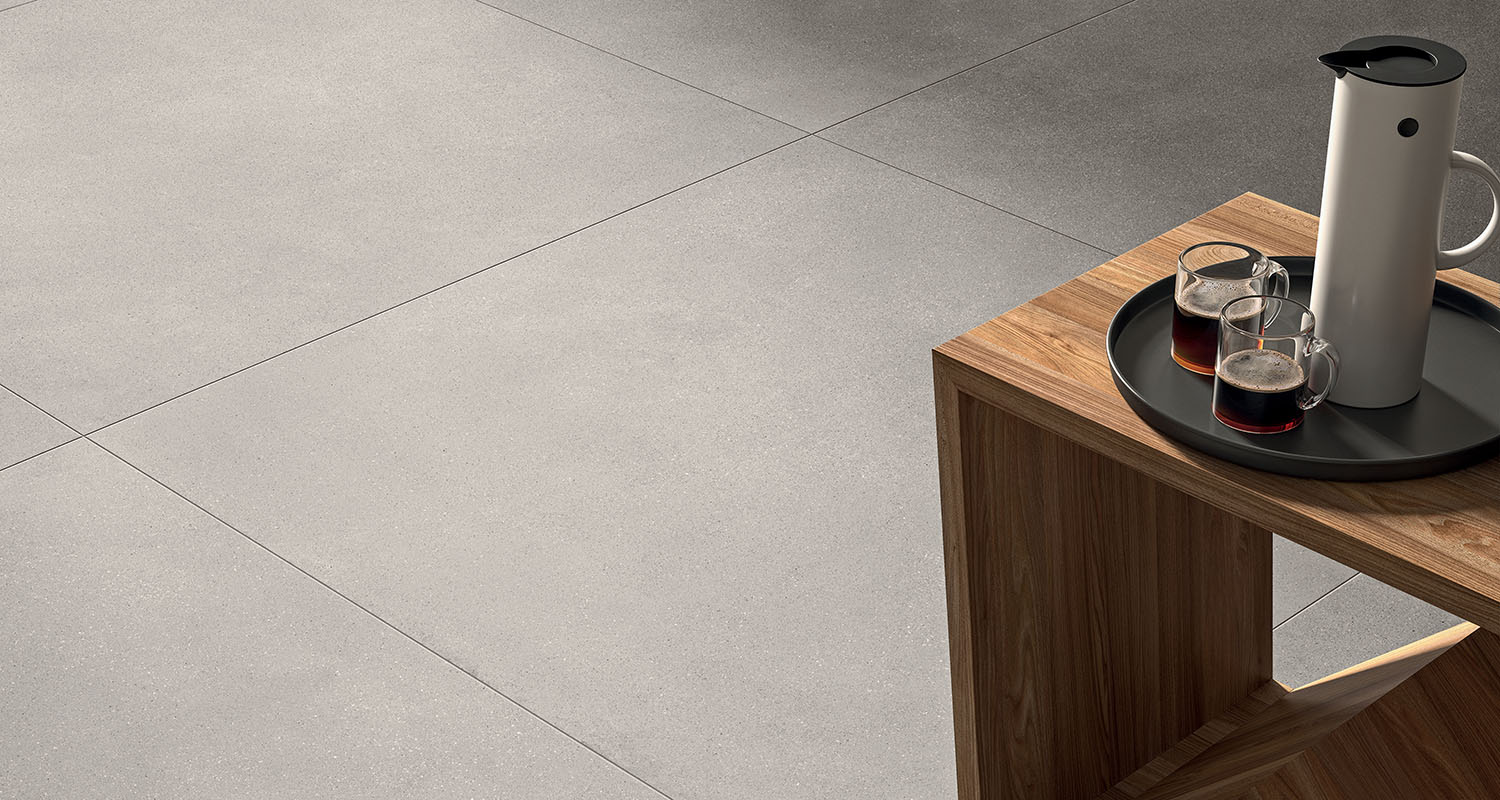
Large-format porcelain stoneware is today highly sought after by architects and interior designers. Among large tiles, the 60x120 cm format represents a perfect balance between aesthetic impact and practicality. It has a distinctly contemporary appeal and works across a wide range of styles and applications. It can be used both as floor and wall covering, provided the surface is large enough to allow the format to be read and properly contextualised.
The 60x120 belongs to the family of large formats, yet retains manageable dimensions even in medium-sized residential spaces. It is ideal for living areas and open-plan layouts, modern bathrooms, kitchens, commercial spaces and outdoor paving. Thanks to its rectangular proportions, it can be laid horizontally or vertically, on floors or walls, offering great compositional freedom.
With fewer grout lines, the 120×60 enhances stone, concrete and marble-effect surfaces, bringing out their material depth and graphic richness. It is particularly suited to those looking for a clean, elegant and timeless aesthetic.
Alongside the 60x120 cm, the 120x120 cm format has grown increasingly popular in recent years. A striking option that, despite some limitations in terms of application, doubles the surface area of its counterpart. Above all, it brings renewed energy to the square format, traditionally used for flooring, in this case suited to particularly generous floor areas.
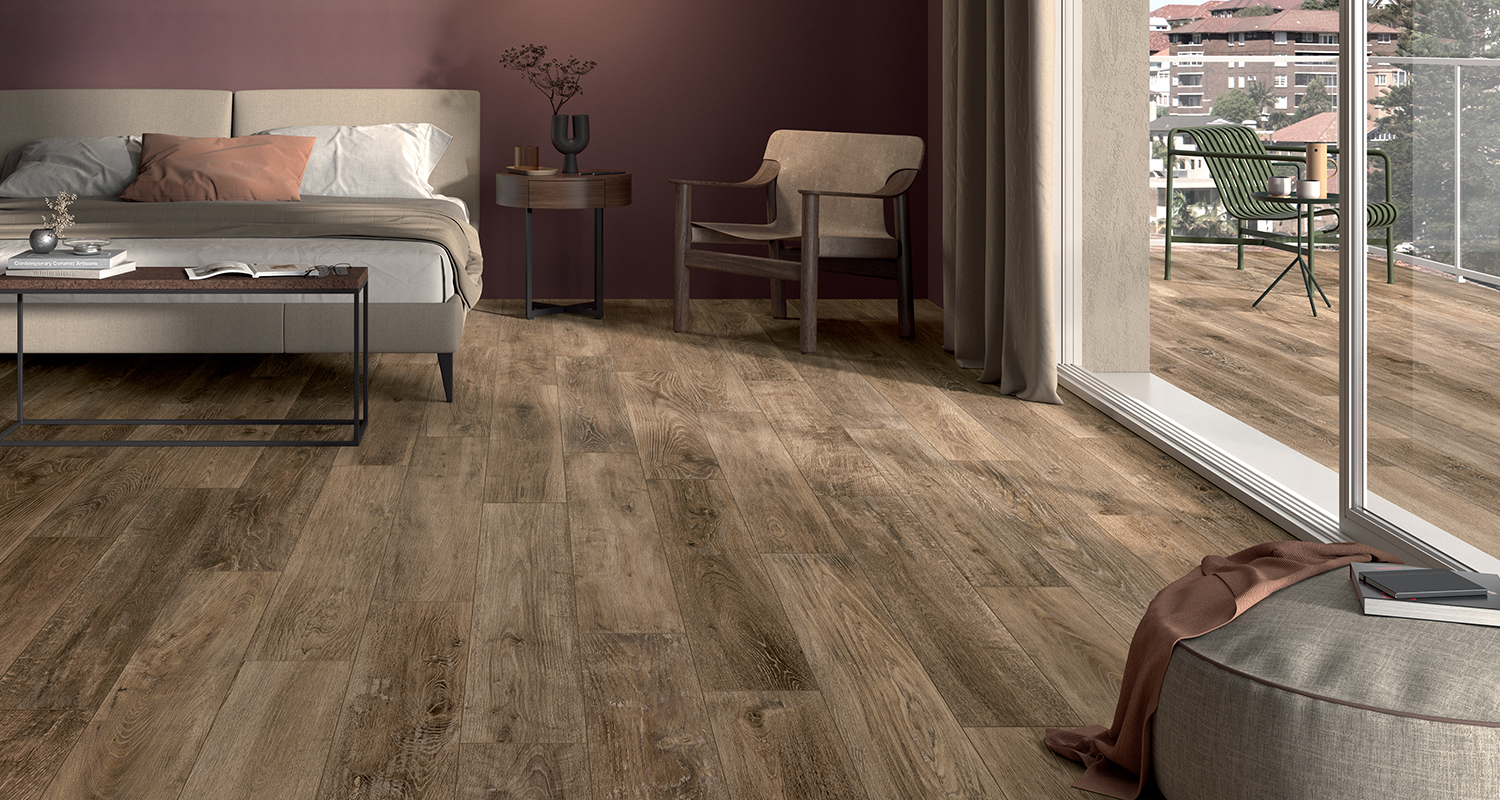
Wood-effect planks are among the most recognisable and versatile formats in porcelain stoneware. Their strength lies in their ability to faithfully replicate the look of parquet, while overcoming its technical limitations — which makes them suitable for use even in moisture-prone spaces such as the bathroom. Ceramic planks are available in a range of sizes, from more compact options (such as 7x40 cm or 10x60 cm) to more generous ones, reaching up to 180 cm in length. Longer planks enhance visual continuity and make the wood effect even more convincing.
Perfect for residential floors as well as commercial spaces and covered outdoor areas, planks lend themselves to a wide variety of laying patterns: straight, staggered, herringbone or chevron. The elongated format naturally draws the eye and helps to visually shape the space.
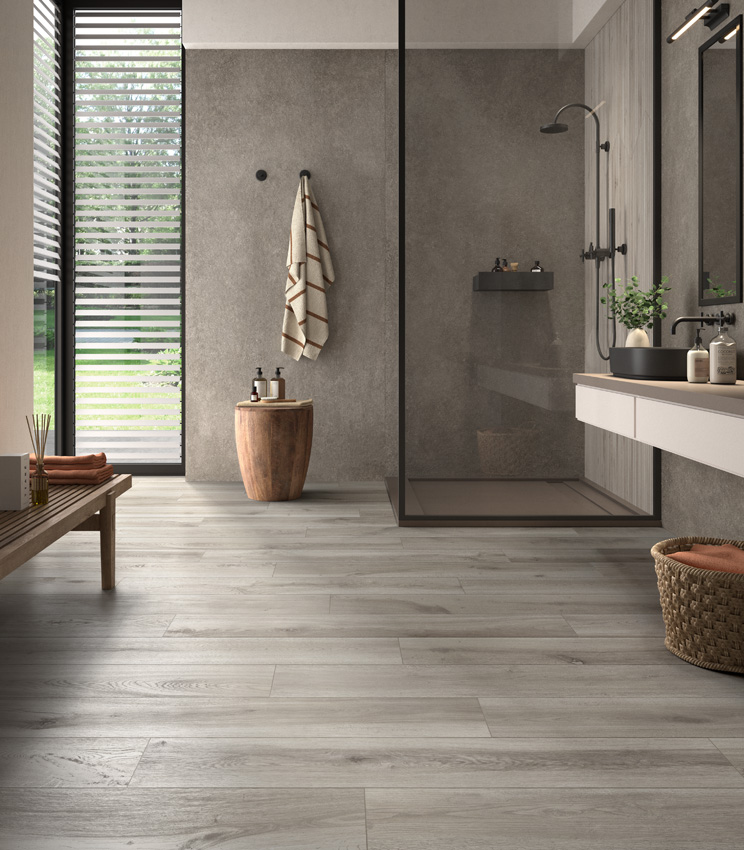
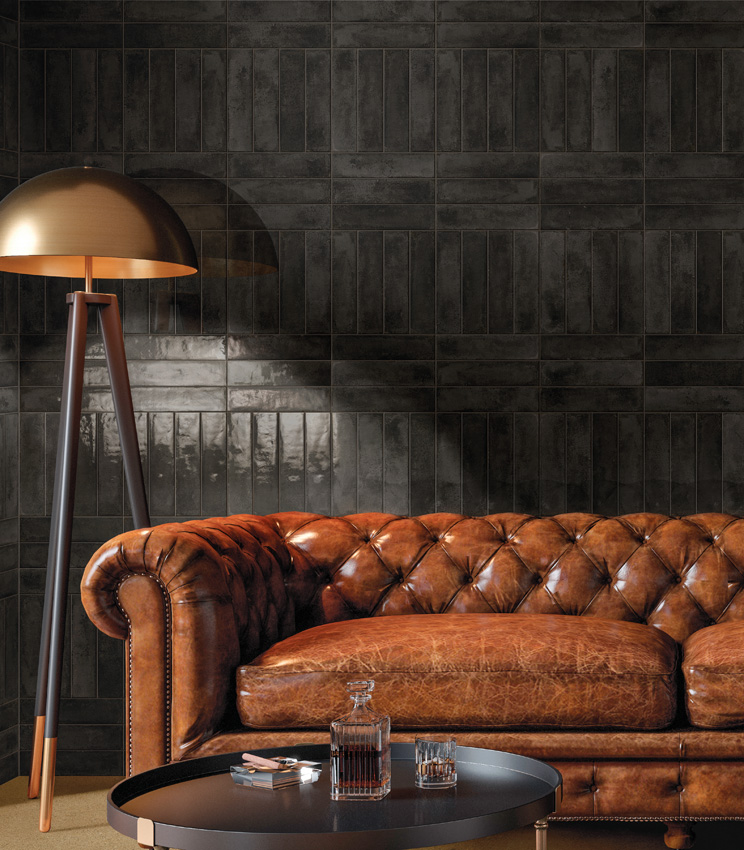
Small-format strips are a refined choice for those looking to introduce a decorative element without sacrificing understated elegance. We tend to associate large tiles with large spaces and small tiles with the more compact rooms of a home. True, but not quite a mathematical rule, as we explored in our dedicated guide to small bathrooms.
Used primarily on walls, strips make it possible to create dynamic surfaces through the rhythm of the grout lines. They are perfect for bathroom walls, walk-in showers, kitchen backsplashes, niches and feature walls. A vertical layout elongates the space and enhances the perception of height, while a horizontal one visually widens the room. The small format also lends itself to staggered or ribbed laying patterns, very much in tune with contemporary design trends.
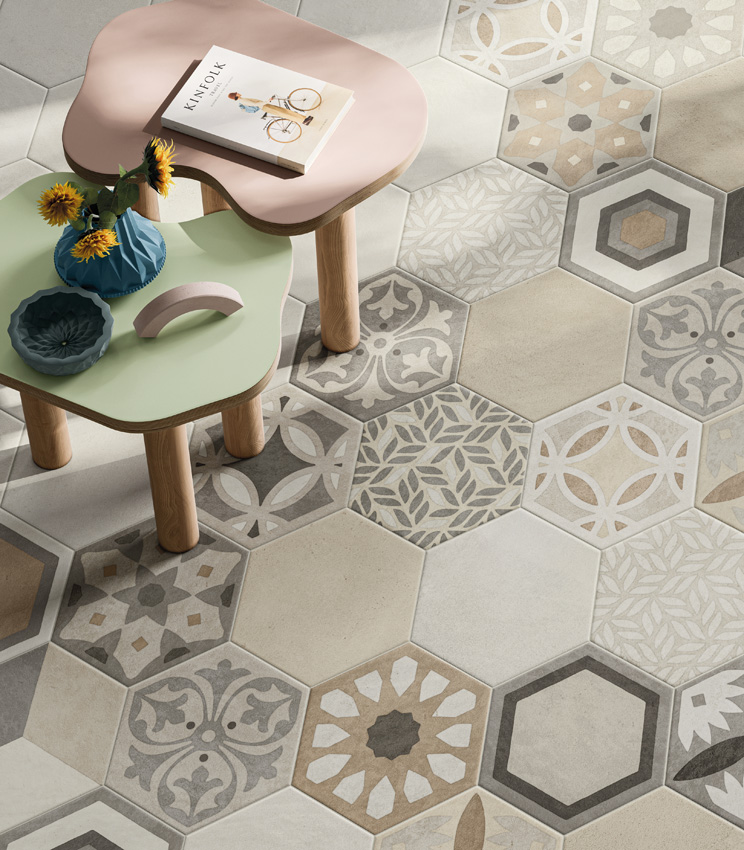
The hexagon is an iconic format, capable of transforming a surface into a true decorative feature — as we explored in our article on decorative tiles. It is a format with a strong visual impact that, thanks to its geometry, breaks away from the linearity of traditional laying patterns and introduces a bold graphic design. It is particularly well suited to floors in compact spaces, decorative wall coverings, transition areas or functional zones, and bar counters. Thanks to the hexagon's distinctively characterful patterns, surfaces become graphic compositions and, as such, genuine design elements. Depending on the colour and finish chosen, the hexagon can take centre stage or enter into dialogue with more neutral surfaces, creating striking material contrasts.
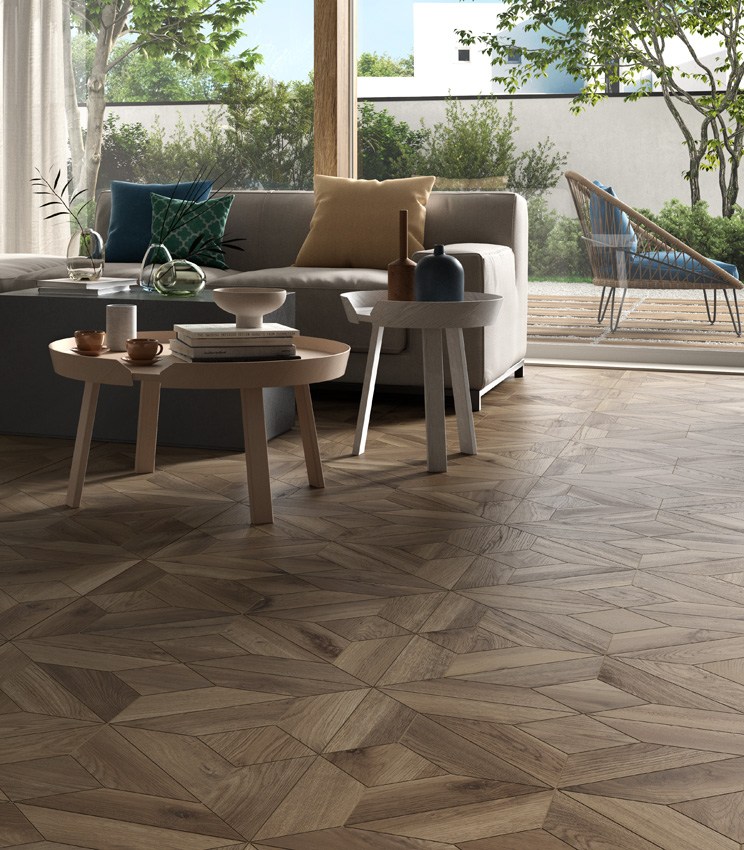
Certain special formats can give rise to unique and highly original laying patterns, such as the coffered layout — typical of wooden floors — and the framed carpet layout, which draws instead from the tradition of marble flooring. Thanks to the precision of waterjet cutting, porcelain stoneware formats make it possible to reinterpret these patterns with compositional rigour and contemporary taste.
The coffered layout is based on the use of strips of different shapes and sizes — sometimes reproduced within a standard-format decorative module — combined together to form a well-defined square module. The result is a varied design with sophisticated, highly decorative geometry, ideal for elegant and prestigious settings. It is particularly suited to large interior floors, where the laying pattern becomes an integral part of the overall design concept.
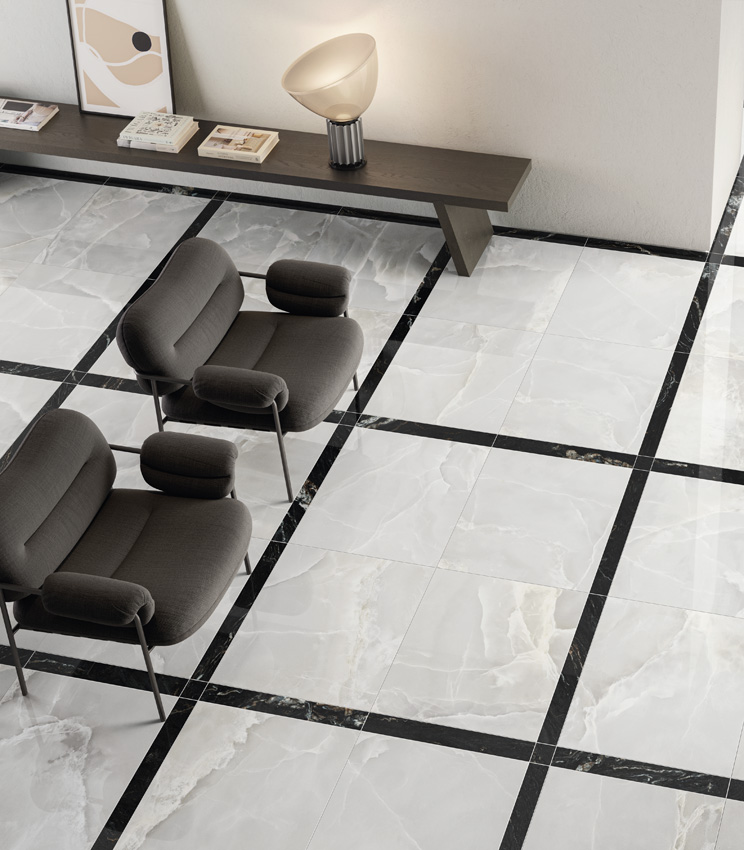
What we have called the "framed carpet" layout involves an original combination of large tiles and small tiles. Also known as a "carpet with border strips", it pairs square tiles in a light colour arranged in a square grid (typically 2x2, meaning two rows and two columns) with thin, darker strips. The frame formed by the latter is completed by small square pieces (again in a light tone or in a different material) at the four corners. The darker bands (known as "bindelli") create a geometric grid that isolates the lighter panels, which appear, quite literally, as a series of framed carpets.
Ideal for interiors with a contemporary classic, art déco or luxury minimal aesthetic, and equally at home in formal reception spaces, this laying pattern showcases the precision of porcelain stoneware by bringing different colours, finishes and formats into dialogue. Combining geometric rigour with refined elegance, it offers endless possibilities for chromatic and compositional personalisation.
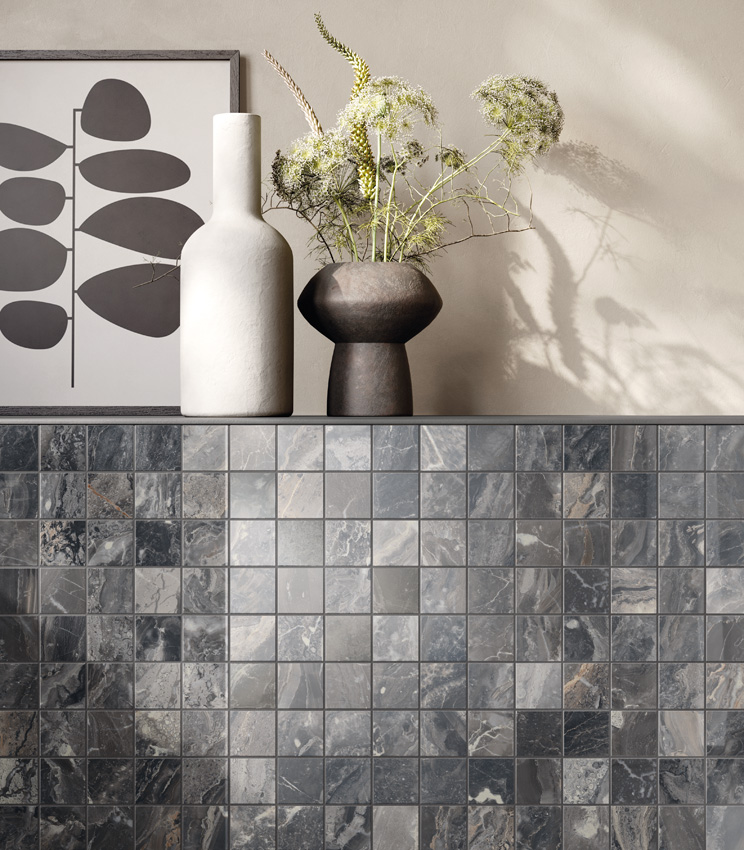
Mesh-mounted porcelain stoneware mosaic is a widely used solution thanks to its exceptional versatility. Available in small or medium formats depending on the size of the individual tesserae, it is well suited to curved surfaces, showers, niches and technical areas. The mesh backing simplifies installation and ensures a consistently regular laying grid.
Beyond its decorative value, mosaic used on floors improves surface grip and is therefore ideal for wet areas. It can be used as an accent element or in seamless continuity with other formats.
These formats represent particularly sophisticated design tools, catering to a taste for geometric decoration and — especially in the case of the parallelogram — requiring the expertise of an interior designer to be used to their full potential.
The parallelogram is relatively rare in ceramic catalogues; when it does appear, it always comes in both a right-hand and a left-hand version, making it possible to create directional laying patterns with a strong visual rhythm and a distinctly original character.
As for long, narrow strips mounted on mesh — reminiscent of window roller blinds — they produce highly contemporary surfaces with a strong sense of directionality. The grout joint is typically very minimal, so as not to interrupt the aesthetic and chromatic continuity of the finished surface. The mesh backing simplifies installation and ensures exceptionally even joints. The overall effect is highly decorative, elegant and geometric, with an unmistakably contemporary appeal.
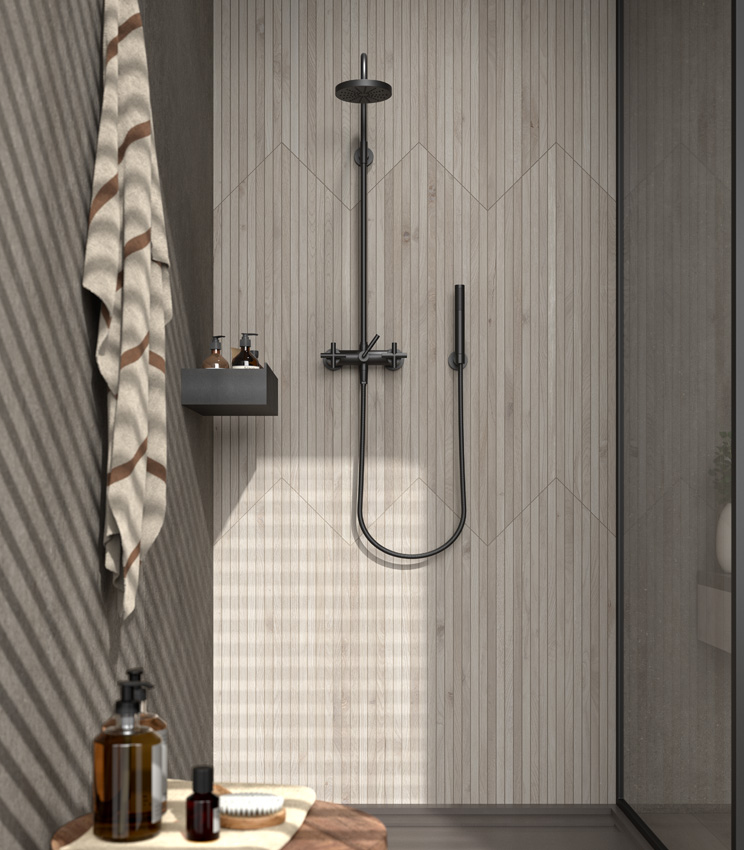
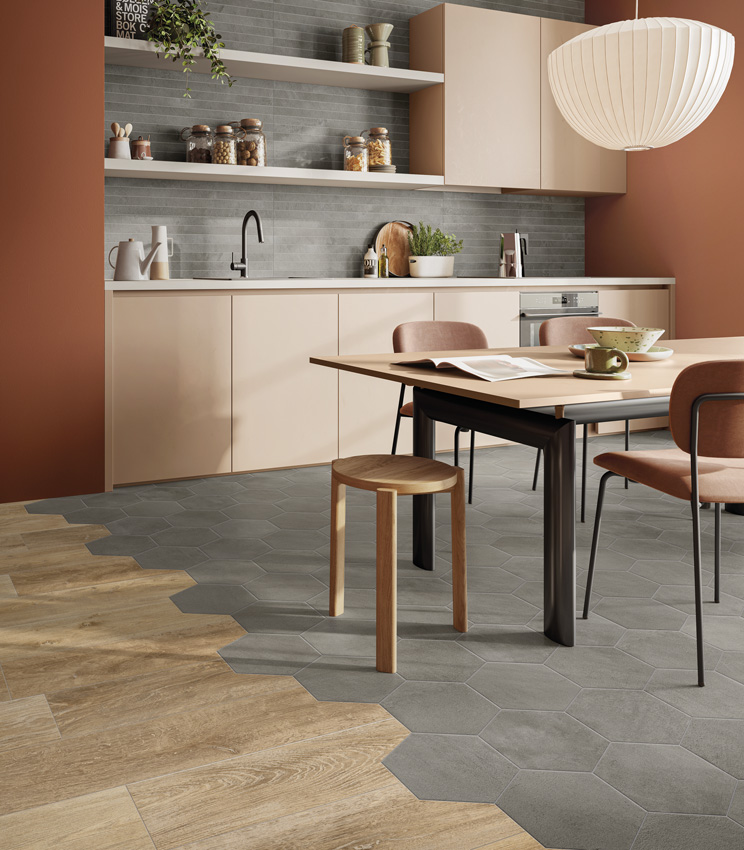
Format is far more than a technical specification: it is a powerful design tool. From the 120×60 to wood-effect planks, from strips to hexagons, through to mosaics and mesh-mounted modules, every porcelain stoneware solution offers a specific design language for interpreting space. Not forgetting large-format porcelain stoneware slabs, such as Zero.3 by Panaria Ceramica, which deserve a dedicated discussion of their own.
Choosing the right format and laying pattern means enhancing the overall project, creating more harmonious spaces and shaping surfaces that stand the test of time — both technically and aesthetically.
One of the great advantages of Panaria Ceramica porcelain stoneware is the ability to combine multiple formats from the same collection, preserving chromatic and material consistency. This is particularly true of collections built on multiple ceramic technologies, such as Revel, Perpetual, Trilogy, La Matière and Pierre de Rêves. Thanks also to the decorative accessories always included in each range, large-format floors can enter into dialogue with small-format wall coverings, mosaics, strips and hexagons, creating balanced and functional visual hierarchies.